
Top 10 Inspection Report Fields: What to include in your Inspection Report
Clear observations. Useful evidence. A practical next step.
Build an inspection report that helps your team understand what was checked, what was found, and what needs attention.
Clearer decisions.

An inspection report is one of the most important tools for property owners, managers, inspectors, and businesses. Whether it's for a residential property, a workplace safety audit, or a routine maintenance check, an inspection report provides a clear and structured record of conditions. To ensure your reports are both professional and effective, there are certain inspection report fields that should always be included. These fields not only document findings but also make the report a useful decision-making resource.
This might form part of your wider safety management system and even be in response to a hazard report. In this article, we'll explain the purpose of an inspection report, why structure matters, and highlight the top 10 fields that every inspection report should contain.
View Inspection Report Examples and Tools to set up your own Inspection Reports
Start with a structure your team can use consistently.
Start with a clear record
What is an Inspection Report?
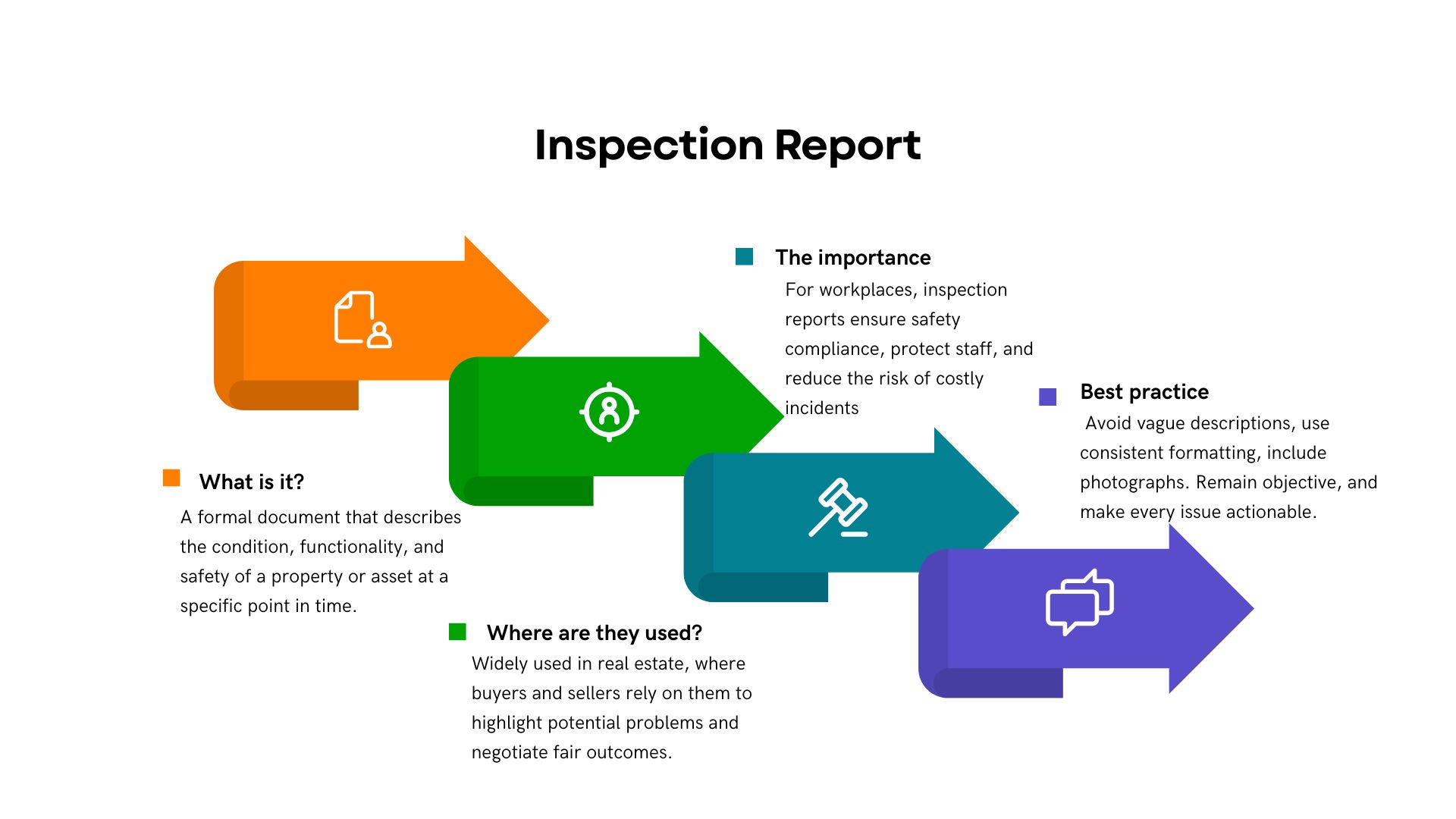
At its core, an inspection report is a formal document that describes the condition, functionality, and safety of a property or asset at a specific point in time. These reports are widely used in real estate, where buyers and sellers rely on them to highlight potential problems and negotiate fair outcomes. They are equally important in workplaces, where inspections help maintain safety standards, identify risks, and support compliance efforts.
A strong inspection report doesn't just note problems; it provides a complete picture of what was inspected, where issues exist, and what steps should be taken next. This makes it a practical resource for future maintenance, budgeting, and planning.
Why The Right Fields Matter
Not every inspection report is created equal. A vague or incomplete report can lead to misunderstandings, disputes, or even legal issues. By including the right inspection report fields, inspectors help make their work consistent, credible, and useful. A well-prepared report provides clarity for all stakeholders, supports compliance with standards, and can be used as evidence in negotiations or safety audits. Ultimately, these fields turn a simple document into a trusted record that helps protect value, safety, and integrity.
Try creating your own Inspection Forms using an online inspection reporting platform.
Your report, field by field
Top 10 Fields to Include in an Inspection Report
Use these ten fields as a starting point, then adapt the details to the asset, inspection scope, and review process. Keep instructions clear enough for different inspectors to record information consistently.
Report Date
The date of inspection provides a clear timeline. It ensures findings are tied to a specific moment in time and can be compared with previous or future inspections.
Inspector Information
Every report should clearly state who conducted the inspection. Including the inspector's name, role, and contact details adds credibility and allows others to follow up with questions.
Property or Asset Location
The report must specify the exact property or asset inspected. Full addresses, building identifiers, or unit numbers remove any ambiguity and make it clear what the findings relate to.
Purpose of Inspection
Readers should know why the inspection was carried out. Was it a pre-purchase check, a workplace compliance audit, or a follow-up after a previous issue? Setting this context ensures the findings are interpreted correctly.
Inspection Checklist
A structured checklist makes sure no areas are overlooked. It provides consistency across inspections and allows readers to see at a glance whether areas passed or failed.
Findings and Observations
This is the heart of the inspection report. Detailed notes should capture both positive conditions and areas of concern. For example, accessible floor areas may appear well maintained, while a ceiling shows visible water staining. Balanced reporting demonstrates thoroughness and professionalism.
Photos and Attachments
Words alone are not always enough. Including photos, diagrams, or supporting documents gives visual evidence of findings. Images make reports more credible, help explain complex issues, and can prevent disputes later.
Severity Rating
Not all issues carry the same weight. A severity rating system—such as low, medium, or high—helps readers understand which problems require urgent attention and which can be monitored over time.
Recommended Actions
A good inspection report doesn't just identify issues; it suggests solutions. Whether it's a repair, replacement, or specialist review, recommendations make the report actionable rather than just descriptive.
Signatures and Approvals
Include a formal review and sign-off process appropriate to the inspection. Inspector and reviewer names, signatures, and dates establish who completed and reviewed the record. Make clear whether a signature acknowledges receipt, confirms review, or approves a follow-up action.
See the record take shape
From observation to follow-up
A blocked storage aisle becomes a documented finding, linked evidence, and an assigned action. This illustrative sequence shows how the fields work together.
1 / 5 · Record the inspection location.
Illustrative example only. No information is submitted.
Workplace inspection · Example
Storage area review
Add the context that matters
Beyond the Basics: Additional Fields That Add Value to an Inspection Report
While the top 10 fields form the foundation of every inspection report, additional details can strengthen the document even further. Many inspectors include property details such as the size, type, and usage of the building. Others provide a dedicated section for structural assessments, reviewing the condition of foundations, walls, and roofing.
It is also common to document the state of key systems, such as plumbing, HVAC, and electrical wiring. Safety concerns are another critical area to capture, including observed electrical issues and tripping hazards. Suspected hazardous materials, such as asbestos, need appropriate specialist assessment rather than identification from appearance alone. Environmental context can also add value, especially in properties affected by soil conditions, drainage, or nearby industrial activity. Finally, attaching relevant documents such as warranties, permits, or maintenance histories provides useful background information that can help stakeholders understand the property's past and plan for its future.
Common Areas to Cover During Inspections
A well-rounded inspection report typically addresses both interior and exterior areas of a property. On the outside, inspectors will look at foundations, walls, roofs, fences, and driveways. Inside, they will assess walls, ceilings, flooring, and insulation. Kitchens and bathrooms often require extra attention, as plumbing, ventilation, and moisture levels can quickly lead to costly issues if neglected. In workplace or industrial inspections, garages, storage spaces, and machinery areas must also be reviewed for compliance and safety.
By systematically reviewing each of these areas, the inspection report becomes a comprehensive record that stakeholders can trust.

Turn findings into useful decisions
Why an Inspection Report is important for the Workplace
The importance of inspection reports goes far beyond simply noting defects. For real estate, they serve as negotiation tools, helping buyers avoid hidden costs and allowing sellers to address issues upfront. For workplaces, inspection reports support safety management, help protect staff, and can reduce the risk of costly incidents. For property managers, they provide a historical record that guides maintenance schedules and budgeting.
By reducing risks, providing transparency, and supporting informed decision-making, inspection reports protect both financial and personal interests.
Best Practices for Writing Professional Reports
When writing inspection reports, clarity and professionalism matter. Avoid vague descriptions like "needs work" and instead specify the exact problem, such as "cracked tiles in the bathroom floor." Use consistent formatting, with headings and subheadings that make the report easy to scan. Where possible, include photographs and label them clearly. Always remain objective, reporting facts rather than assumptions. Finally, make every issue actionable by suggesting the next steps—whether it's immediate repair or routine monitoring.
Be specific
Identify the exact location and describe the condition someone else needs to find. Connect each photo with its corresponding observation.
Stay objective
Separate what you observed from what needs further assessment. Record uncertainty and arrange specialist review when the scope calls for it.
Close the loop
Give actions an owner and target date. Record the follow-up evidence so reviewers can see what was completed and what remains open.
Build a more useful inspection process
Discover our Platform for Managing Inspection Reports Here
Bring your inspection fields, supporting evidence, and follow-up records into a structure that fits your workplace.